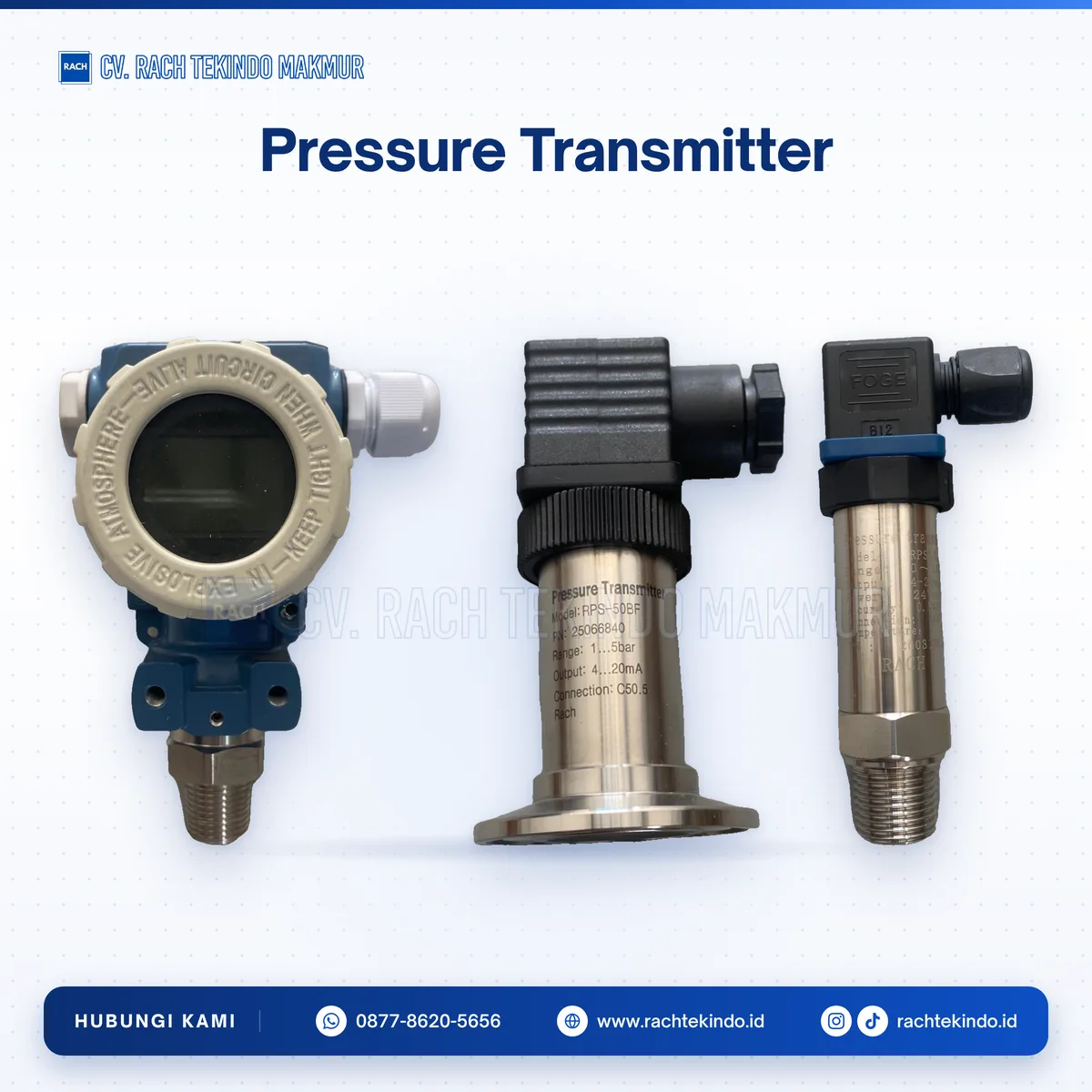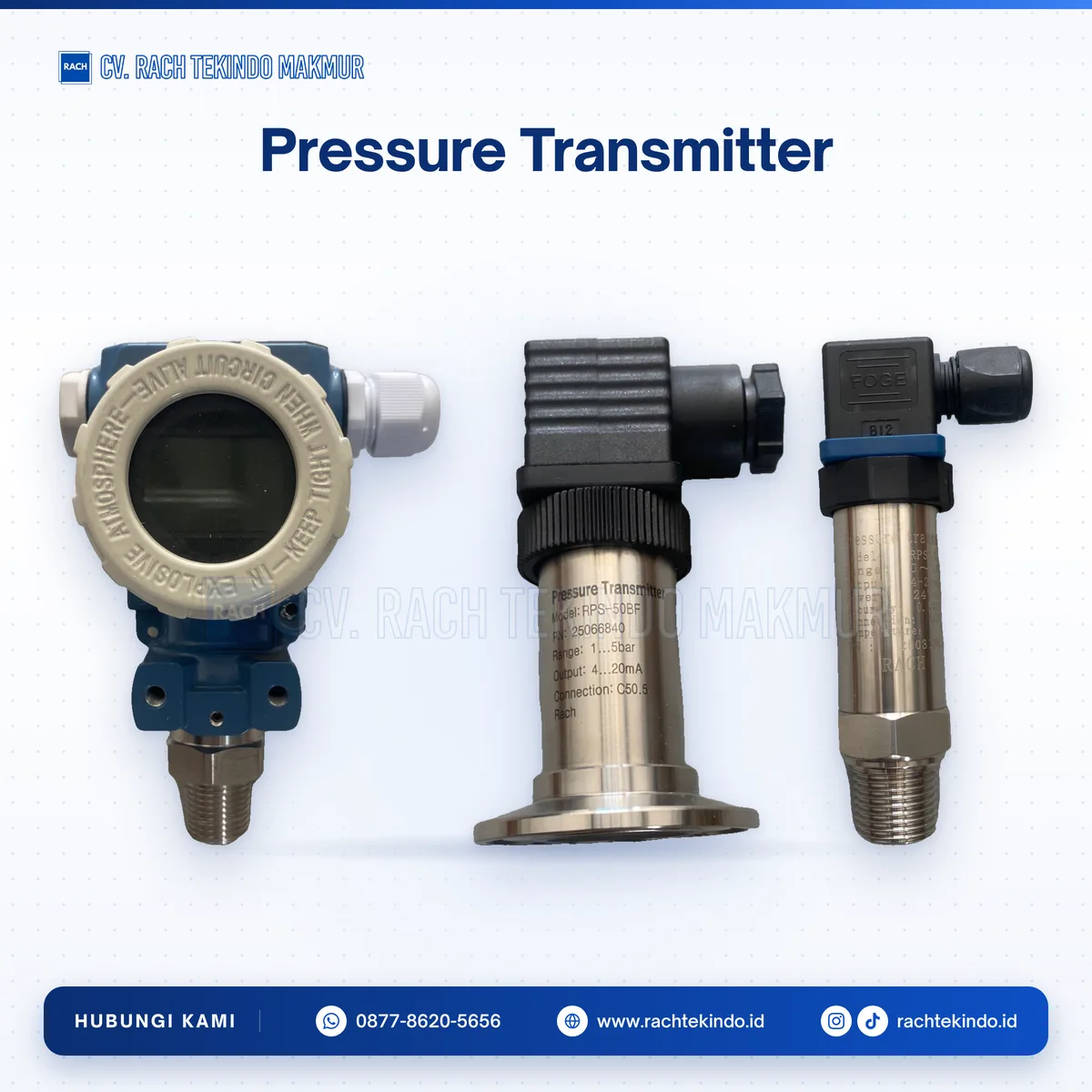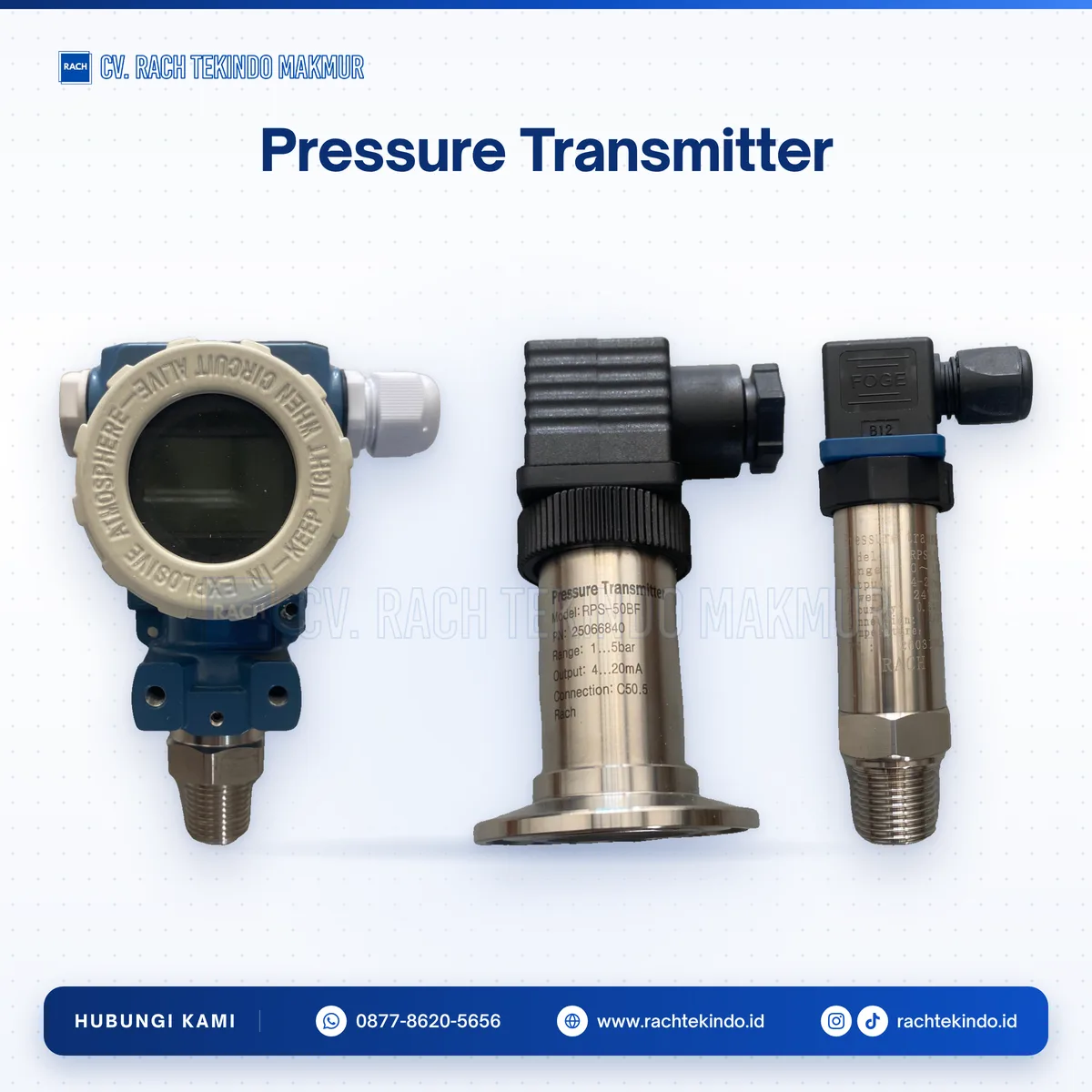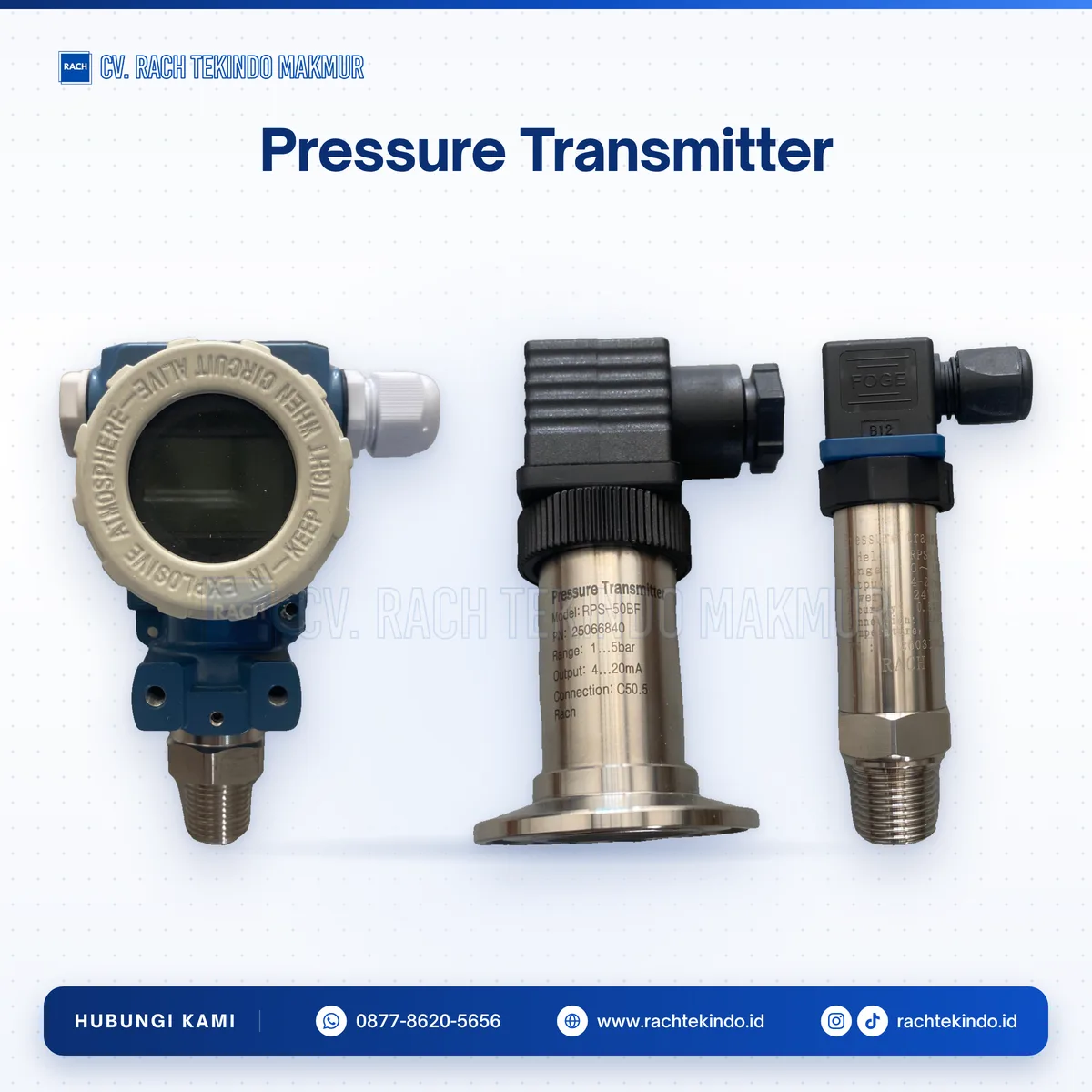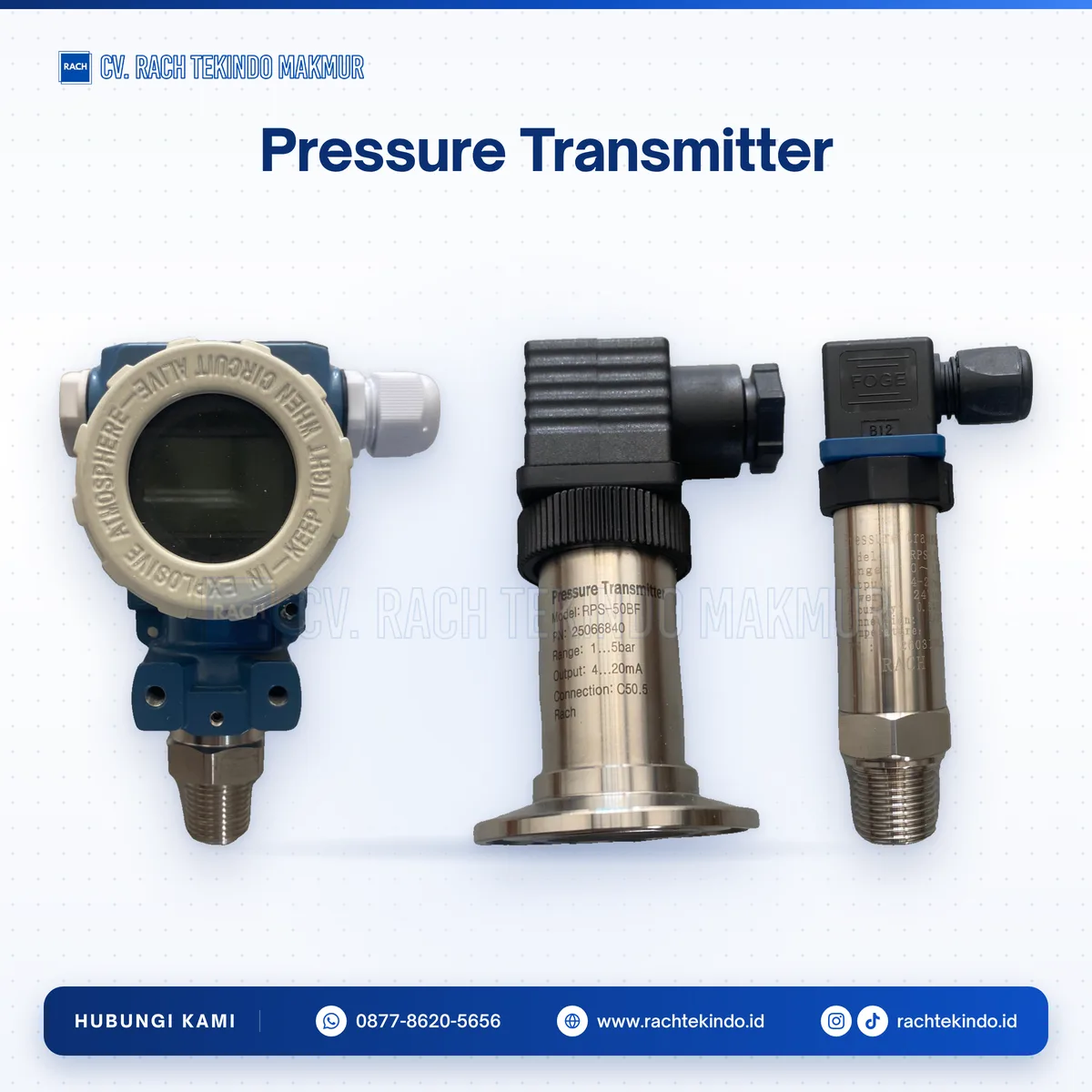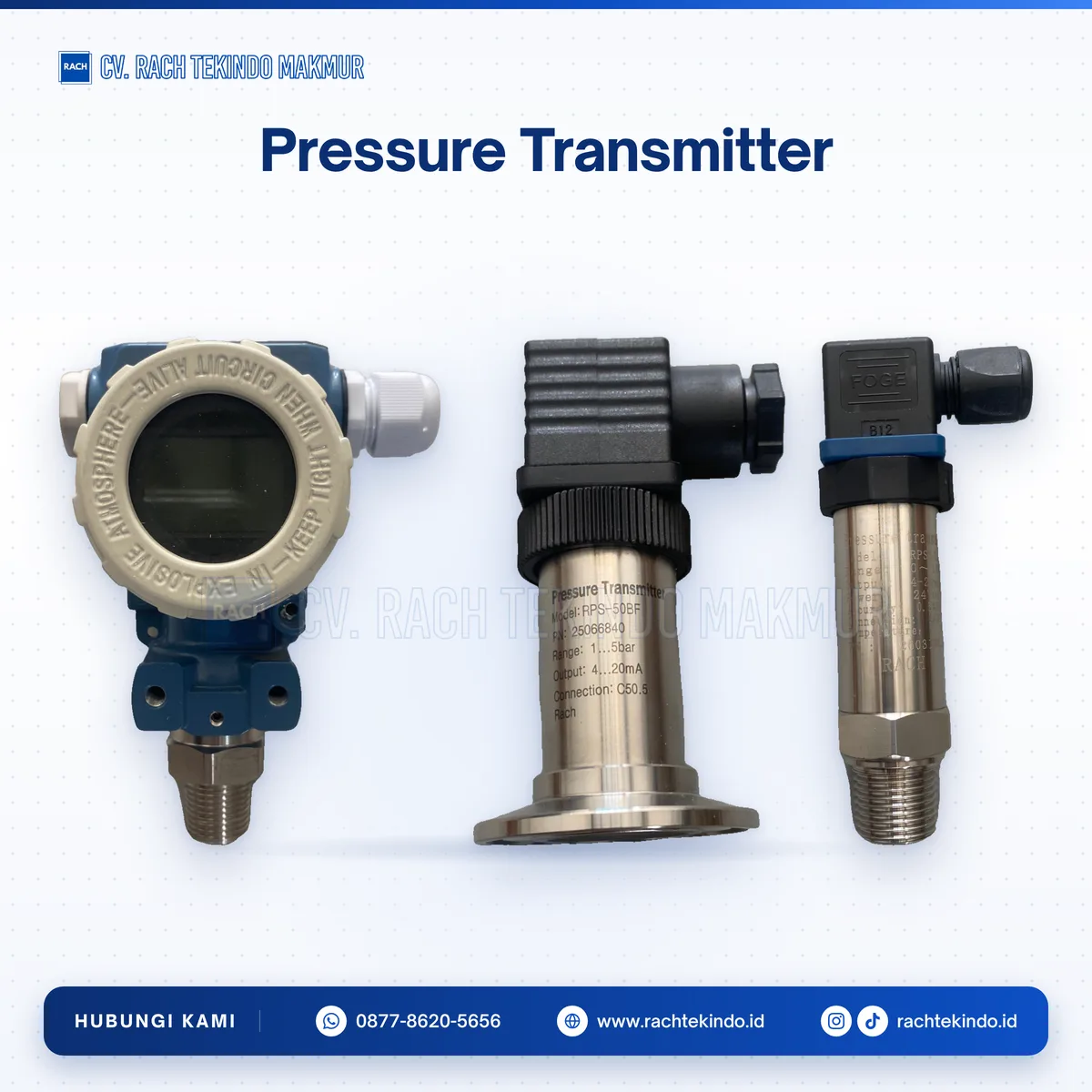
An accurate pressure transmitter does little good if its signal gets corrupted on the way to the control panel. Jumpy readings, values that shift when a large motor starts, or numbers that disagree with the field gauge usually come from the output choice and the wiring, not the sensor. That is why the output type should be decided together with whoever looks after the PLC, DCS, or SCADA.
Two-wire 4–20 mA is still the most common choice. 24 VDC from the panel flows through the transmitter and back to the PLC's analog input card. The transmitter regulates the current according to pressure, so the resistance of several hundred meters of cable does not change the reading. What you do need to check is total loop load: supply voltage minus the transmitter's minimum operating voltage, divided by 20 mA, must exceed the combined resistance of the PLC input, the cable, and any other device in the loop.
In the PLC, the signal is scaled to engineering units. For a 0–16 bar transmitter, 4 mA maps to 0 bar and 20 mA to 16 bar. Many transmitters also drive the current below about 3.6 mA or above about 21 mA when they detect an internal fault. Use this by setting an out-of-range signal alarm in the PLC so operators know when the number on screen can't be trusted.
HART adds digital communication on top of the 4–20 mA signal with no extra wiring. With a HART communicator or laptop software, a technician can re-range the transmitter, read pressure in engineering units, check sensor temperature, and review diagnostics without opening the device. Make sure the loop has at least about 250 ohms of resistance so the HART signal can be read. In plants with hundreds of measuring points, reconfiguring transmitters from the panel saves a lot of ladder climbing.
Modbus over RS485 suits areas with many transmitters close together, such as pump stations or water distribution networks. Dozens of devices can be daisy-chained on a single twisted pair, each with its own address. Network length can reach roughly 1,200 meters at low baud rates. The keys are a true daisy-chain with no long stubs, 120-ohm termination resistors at both ends, and identical baud rate and parity settings on every device.
Whatever the output, cable quality decides how stable the signal is. Use shielded twisted pair, ground the shield at the panel end only, and keep signal cables out of the trays carrying motor power or VFD output. If readings fluctuate every time an inverter runs, check cable routing and grounding before blaming the transmitter.
CV. Rach Tekindo Makmur supplies Pressure Transmitters for a wide range of industrial instrumentation needs. If you need pressure transmitters, differential pressure transmitters, or consultation on configuration and installation for your pressure measurement system, contact us on WhatsApp at 0877-8620-5656 to discuss your technical requirements and request a quotation tailored to your application.