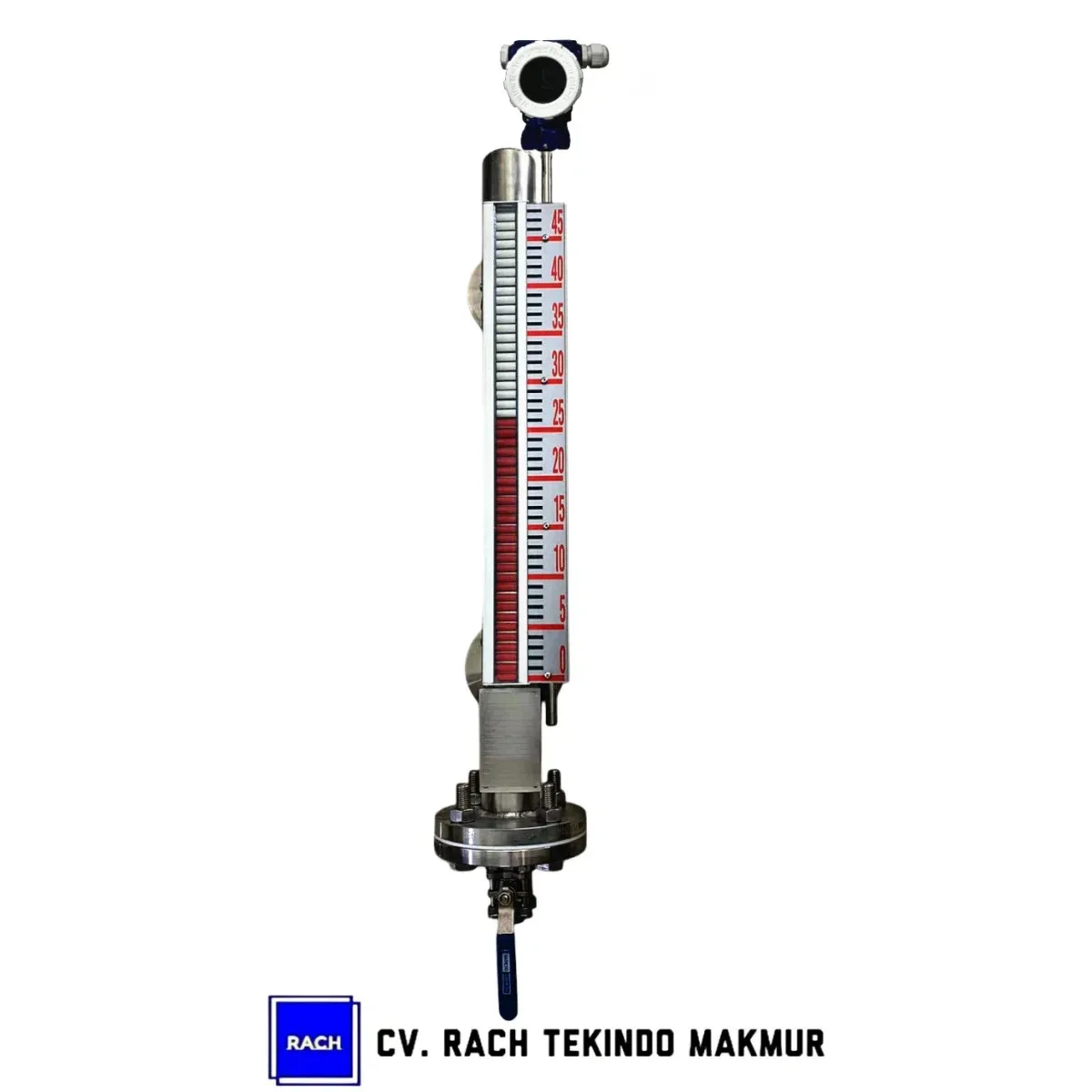
Most complaints about a magnetic level gauge giving the wrong reading turn out to have nothing to do with a faulty unit. They come from installation. A float fitted upside down, a chamber out of plumb, or flaps not reset before start-up can throw the reading off by several centimetres. Installed properly, a magnetic level gauge can run for years with very little attention.
The first step is choosing a process connection that suits the tank. Threaded connections fit small, low-pressure tanks such as diesel day tanks or water tanks. Flanged connections are standard for storage tanks, pressure vessels and any application that needs a specific pressure rating. Union connections let the chamber be removed without turning the whole body, while blind ferrule or sanitary clamp connections are used in food, beverage and pharmaceutical plants where quick dismantling for cleaning is needed.
The distance between the top and bottom nozzles must match the chamber's centre-to-centre dimension. If the tank nozzles are not vertically aligned, the chamber will sit at an angle and the float may rub against the wall. Use a spirit level or plumb line during installation, and make sure the bottom nozzle sits above the sludge layer in the tank so it does not clog quickly. Fit isolation valves on both nozzles and a drain valve at the bottom of the chamber, so the gauge can be removed or cleaned without emptying the tank.
Pay attention to what surrounds the chamber. Large ferromagnetic objects such as structural steel beams, iron ladders or carbon steel pipes placed too close can disturb the magnetic field and make flaps turn when they should not. Leave enough clearance, and avoid running heavy power cables or mounting motors right next to the indicator rail.
Before filling the chamber, insert the float according to the up-direction mark usually found on its body. A float fitted upside down gives a skewed reading. Then reset all flaps to the empty colour by running the reset magnet from top to bottom along the rail. Open the bottom valve slowly first, then the top valve, so liquid enters without a surge that could make the float jump.
Routine maintenance is simple. Drain the chamber regularly, especially with liquids that carry mud, scale or metal particles, since deposits at the bottom can restrict float movement. Compare the rail reading against a dipstick or the level transmitter every few months. If a flap does not turn, try moving it with the reset magnet; a flap that stays stuck usually points to dirt in the rail or a float that has gained weight from scale.
For media that crystallise or solidify, such as concentrated sugar solutions, strong caustic or heavy oil, the chamber can be fitted with heat tracing and insulation to keep the medium liquid. Outdoors, make sure the indicator rail is protected from impact and not covered by insulation.
With no mandatory electronics, no glass and a float as the only moving part, a magnetic level gauge generally has a long service life, provided the material suits the medium and the installation is done correctly.
CV. Rach Tekindo Makmur supplies Magnetic Level Gauge Indicators for a wide range of industrial instrumentation needs. If you need level gauges, level switches, level transmitters, or consultation on configuration and installation for your level measurement system, contact us on WhatsApp at 0877-8620-5656 to discuss your technical requirements and request a quotation tailored to your application.