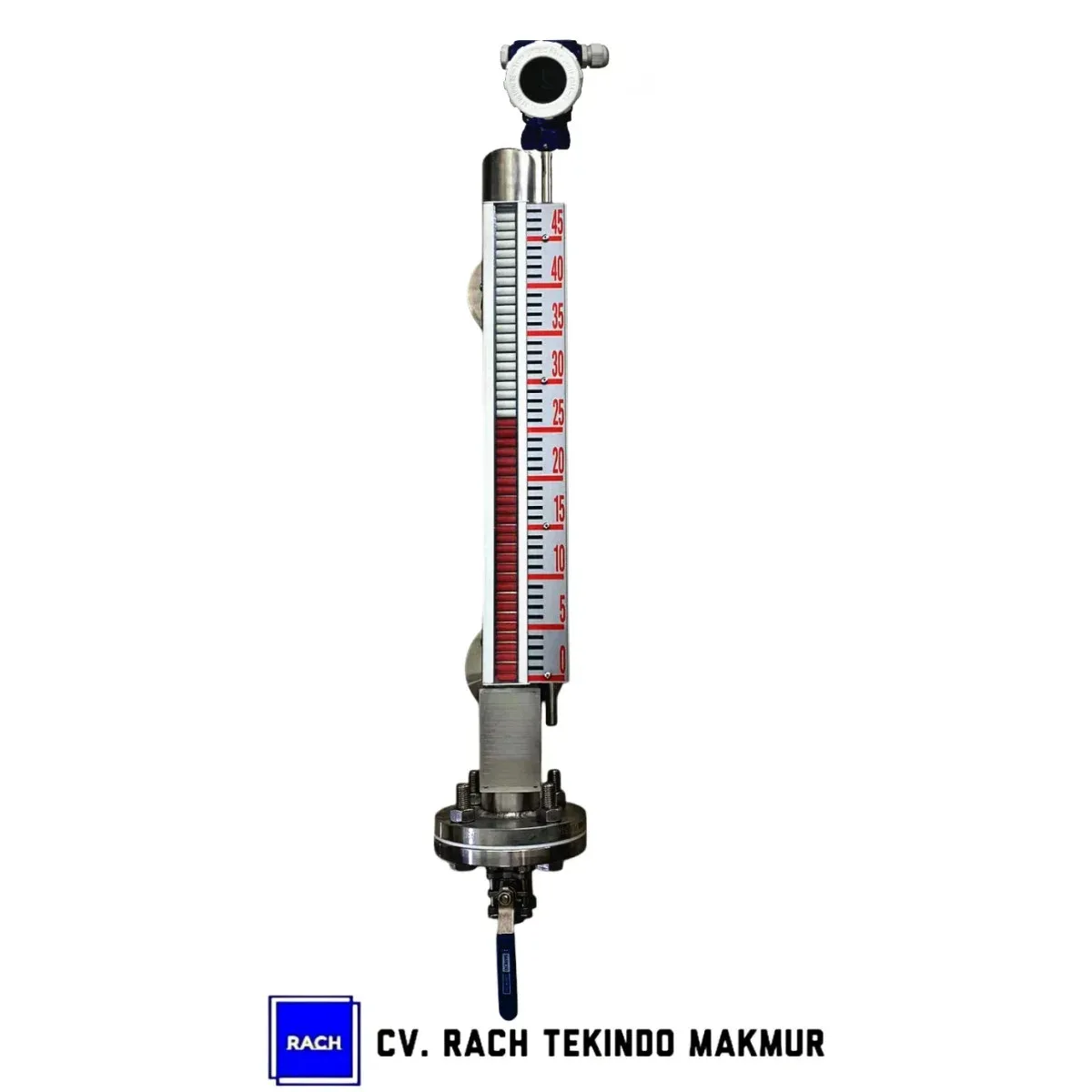
Anyone who has wiped a fogged sight glass on a chemical tank knows the problem: the glass clouds over, it can crack, and every leak means process liquid ends up on the plant floor. The magnetic level gauge indicator was designed to remove that problem. It shows the liquid level visually along the full height of the tank, while the liquid itself stays sealed inside a closed metal or plastic chamber.
The gauge has three main parts. The first is a side chamber connected to the tank through top and bottom nozzles, so the level inside the chamber always matches the level in the tank. The second is a float with a permanent magnet inside, which rises and falls with the liquid surface. The third is an indicator rail mounted outside the chamber, fitted with a column of magnetic flaps or balls, usually red on one side and white on the other.
The working principle combines buoyancy and magnetism. The float is built with a lower density than the liquid, so it always sits right at the surface. As the float rises, its magnetic field turns each flap from white to red. As the level drops, the flaps turn back to white. The result is a solid column of colour whose height equals the liquid height, easy to read from several metres away, even in poorly lit areas.
Because the indicator never touches the process medium, the reading mechanism is fully isolated from the liquid. This is its biggest advantage over a sight glass. There is no glass to break under pressure or thermal shock, no glass gaskets to replace on a schedule, and far less risk of exposing operators to toxic or flammable liquids. The reading is also stable, since a flap that has turned stays in place even under light vibration.
The measuring length can be built to suit the tank height, from a few hundred millimetres on a day tank to several metres on storage tanks and process vessels. The centre-to-centre distance between the nozzles is the basic dimension for ordering, so it is best measured on site or taken from the tank drawing.
For an accurate reading, a few process details should be confirmed before choosing a unit. Liquid density decides the float design, since a float for diesel is not the same as one for water or sulphuric acid. Operating pressure and temperature decide the chamber wall thickness and material. The corrosiveness of the medium decides the choice between SUS304, SUS316, UPVC or CPVC. If these details are wrong, the float may sink, stick, or the chamber may corrode much faster than expected.
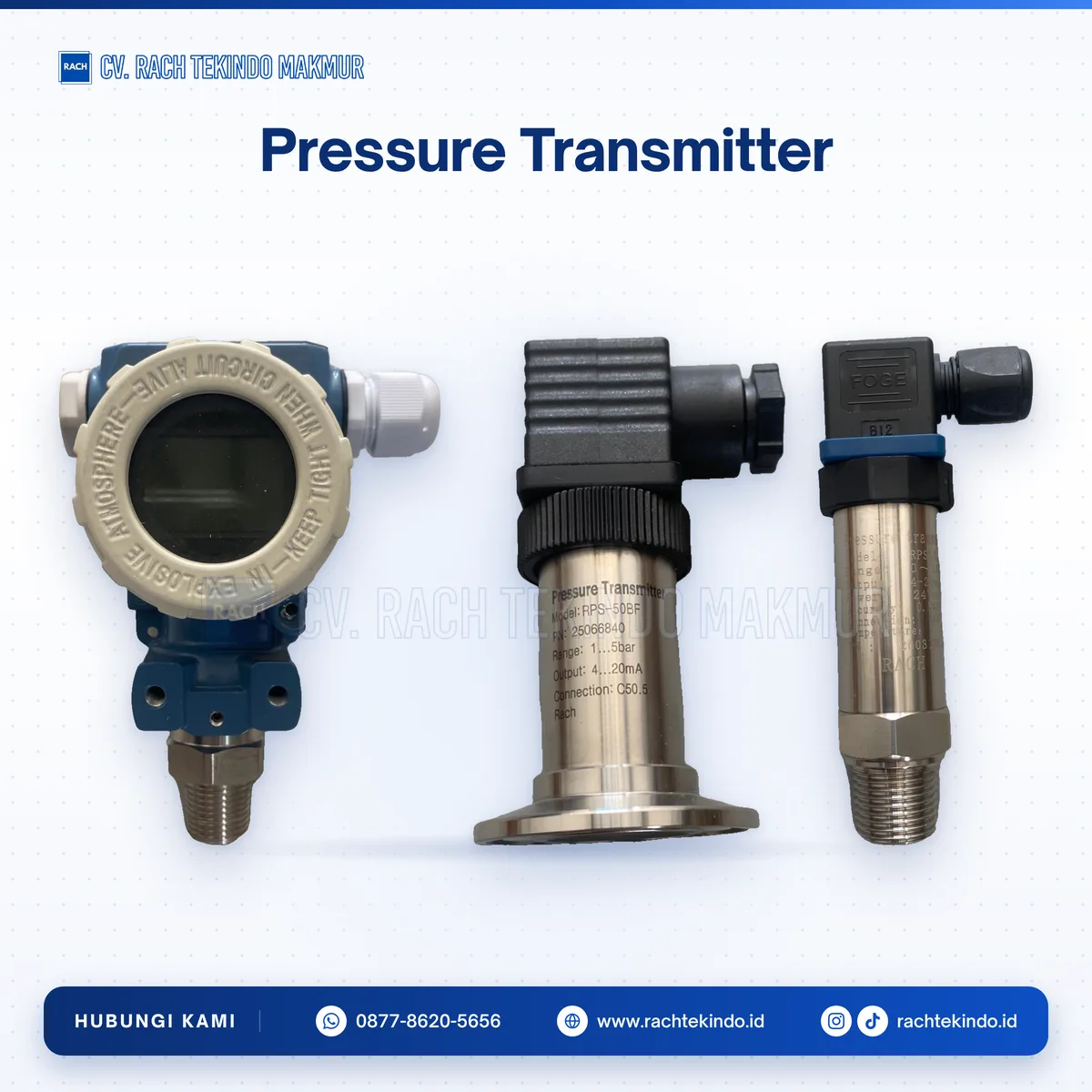
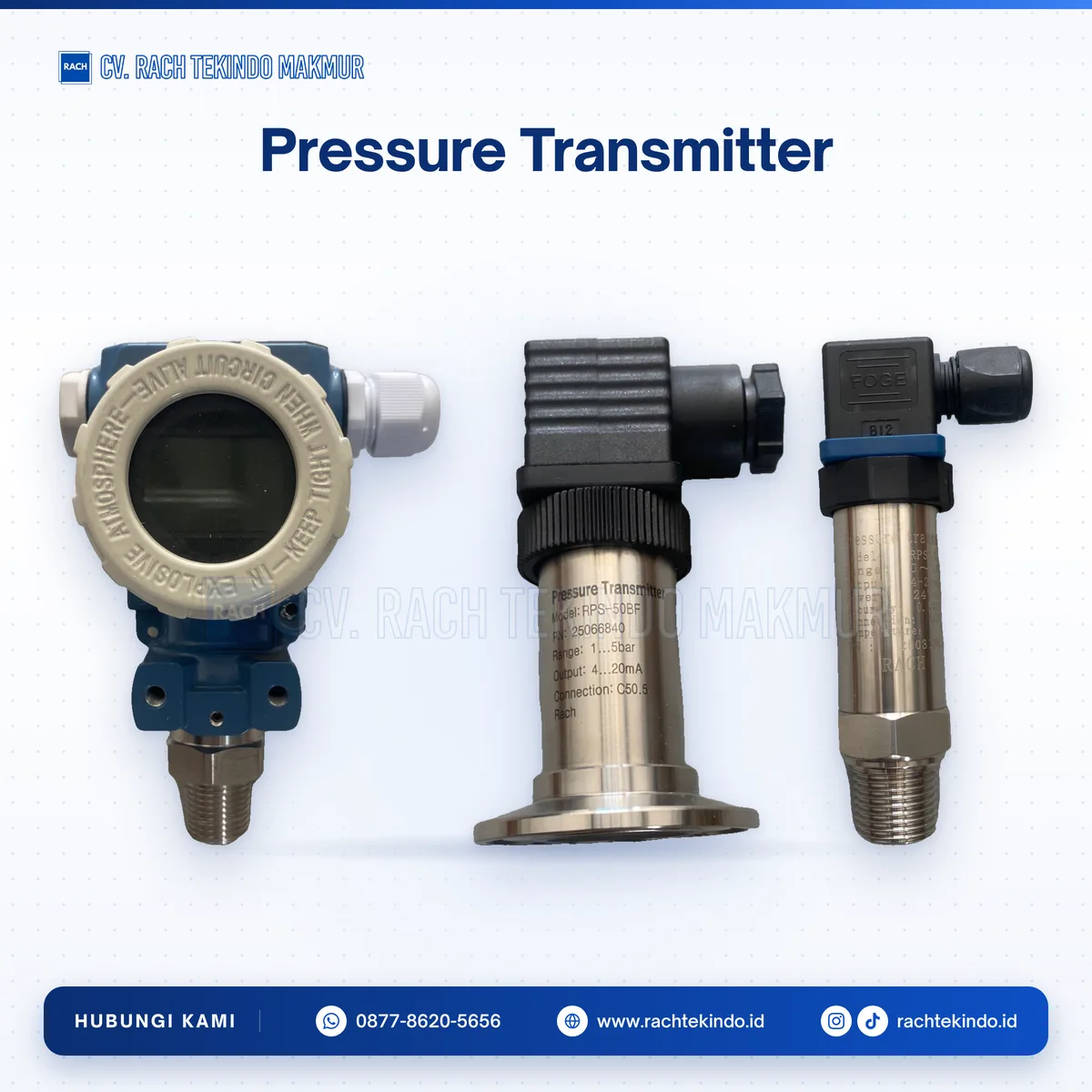
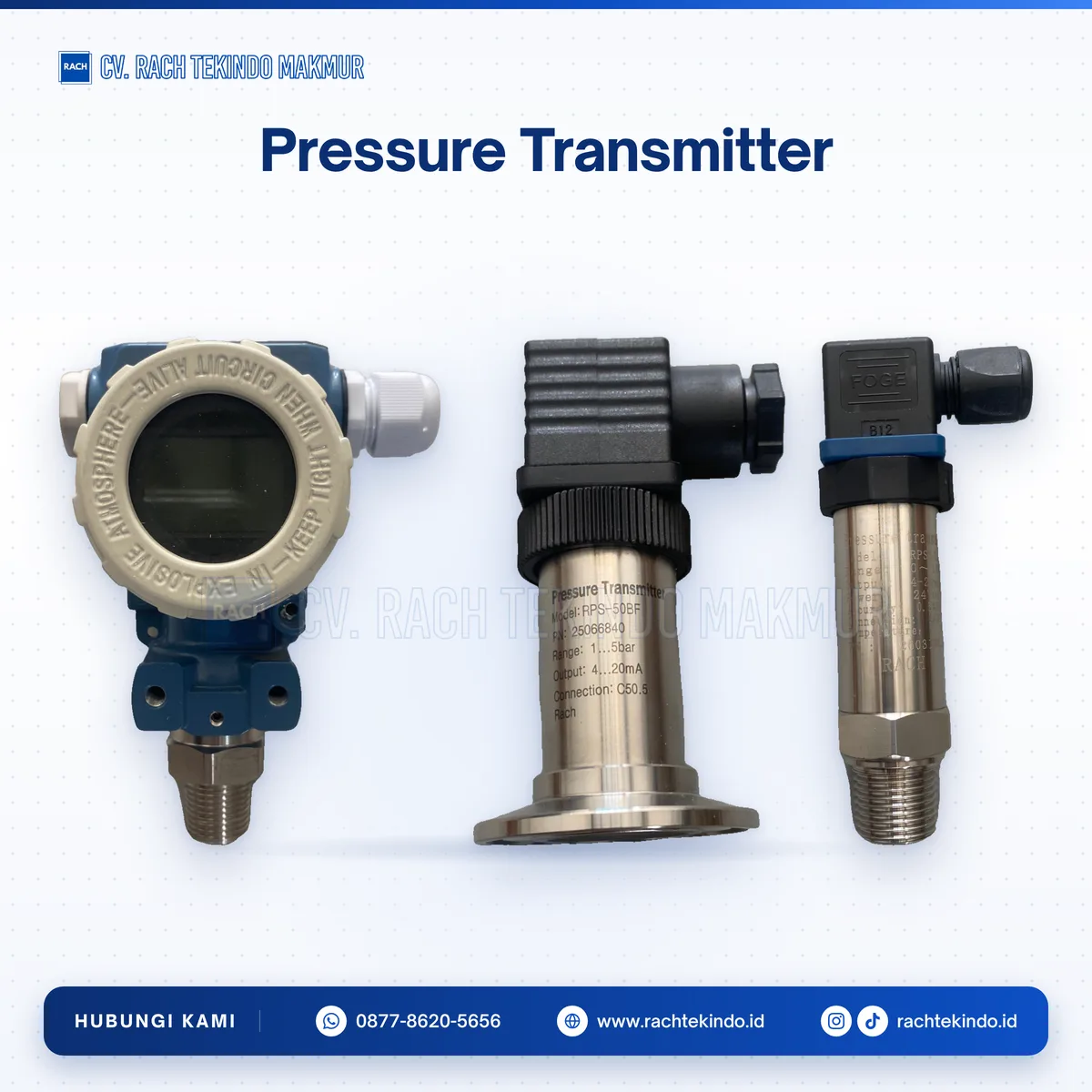
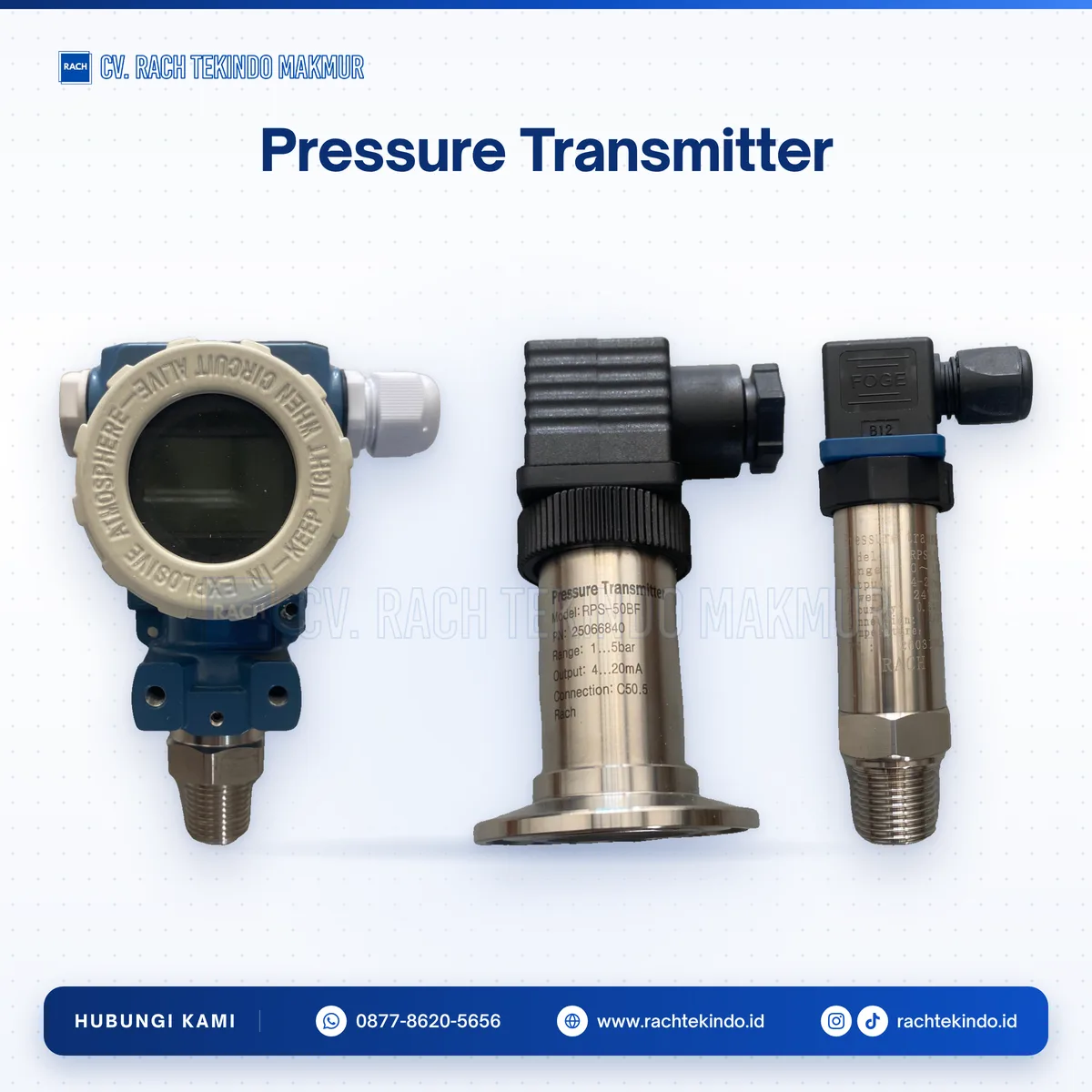
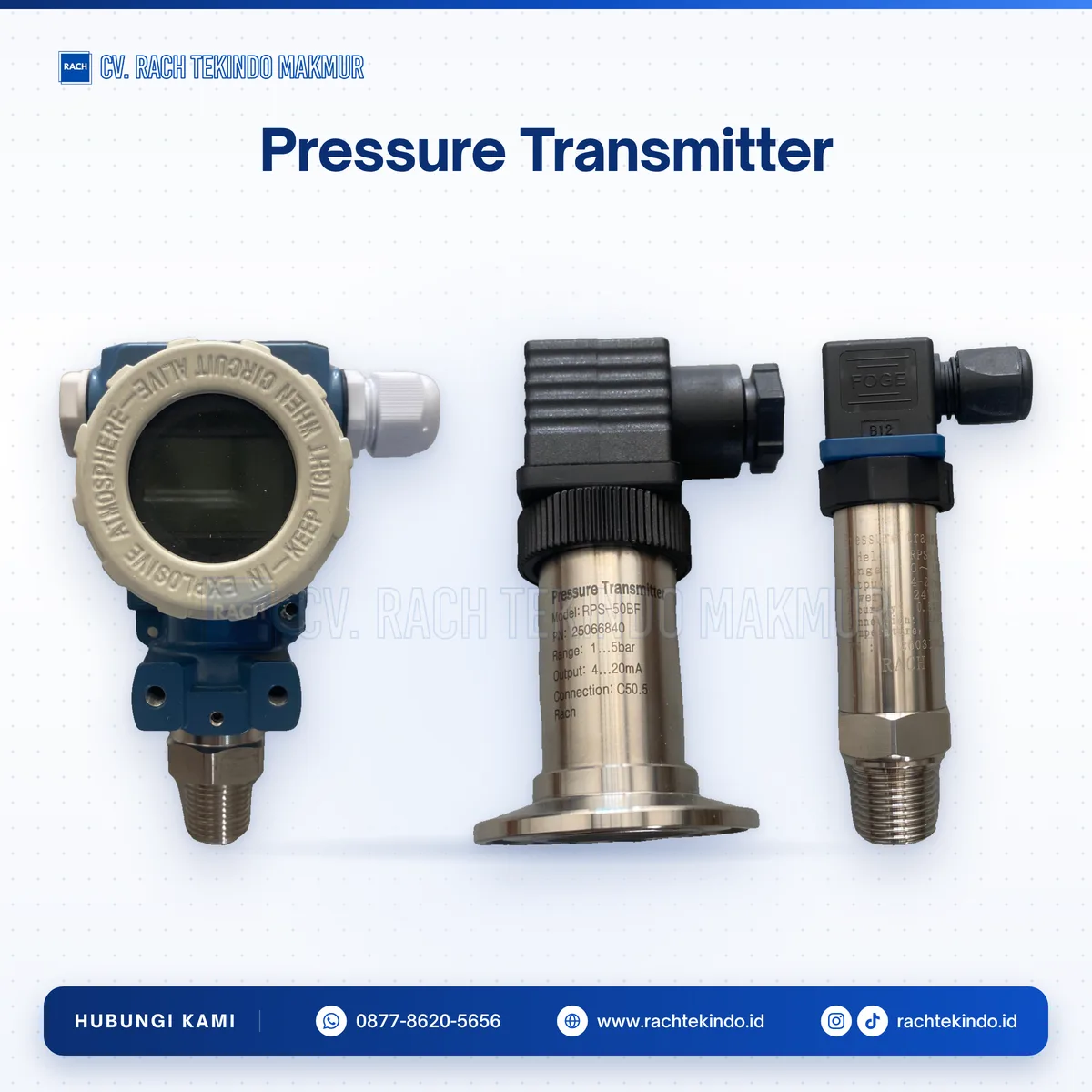
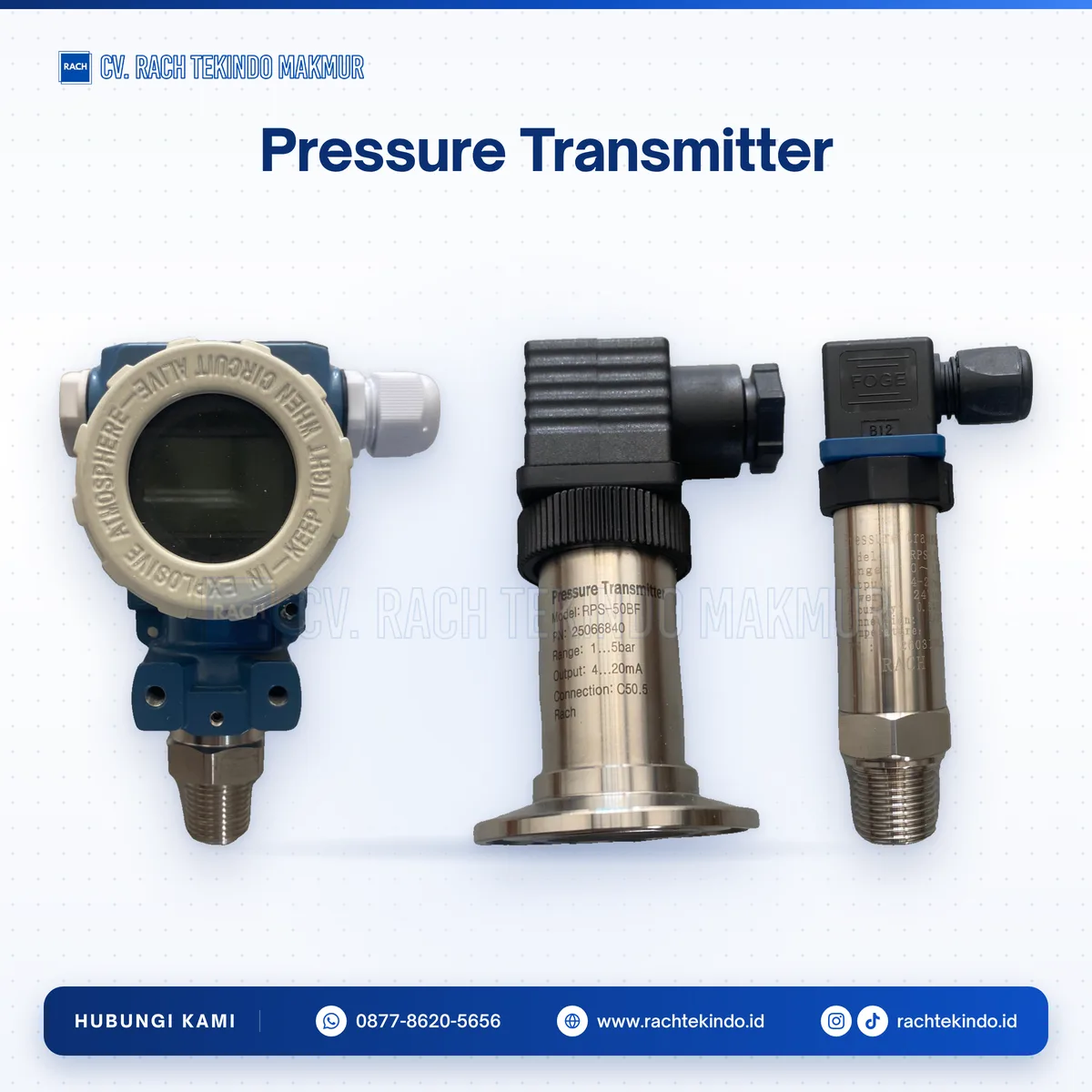
A magnetic level gauge is also easy to extend. A magnetic level switch can be clamped to the side of the chamber for high or low alarms, and a level transmitter with a 4–20 mA output can be mounted alongside the chamber to send level data to a PLC or DCS. One measuring point can then serve a local reading for the operator and remote monitoring from the control room.
CV. Rach Tekindo Makmur supplies Magnetic Level Gauge Indicators for a wide range of industrial instrumentation needs. If you need level gauges, level switches, level transmitters, or consultation on configuration and installation for your level measurement system, contact us on WhatsApp at 0877-8620-5656 to discuss your technical requirements and request a quotation tailored to your application.