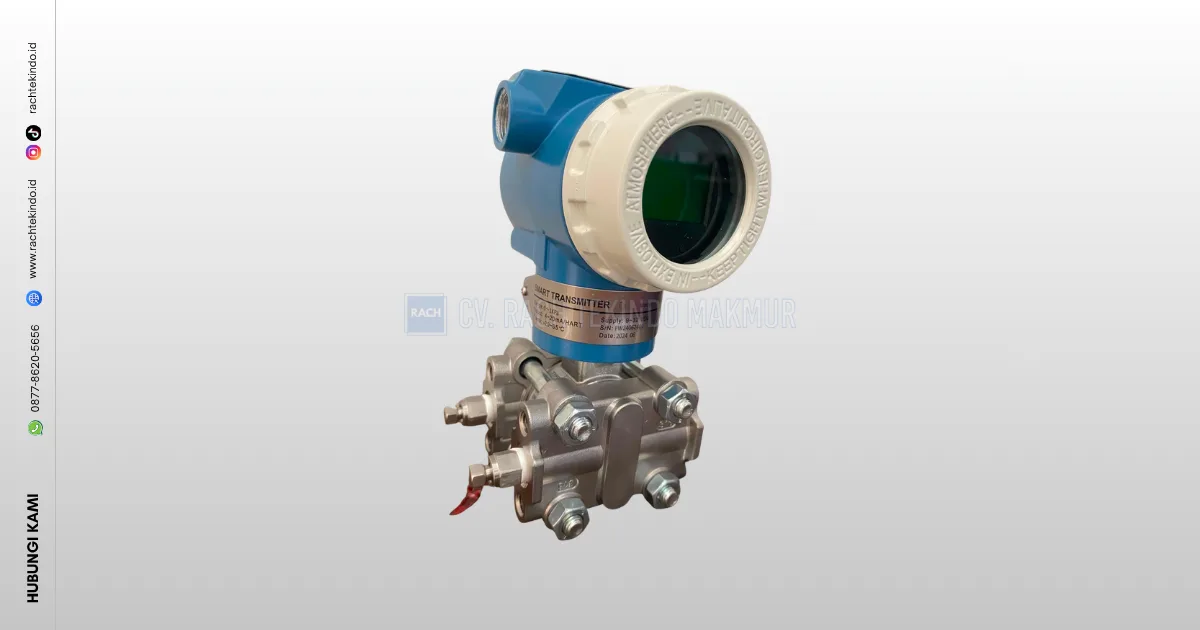
Despite the rapid development of modern flow measurement technologies such as Electromagnetic Flow Meters, Ultrasonic Flow Meters, Coriolis Mass Flow Meters, and Vortex Flow Meters, the Differential Pressure Transmitter (DP Transmitter) remains one of the most widely used solutions for industrial flow measurement.
The operating principle is straightforward. As fluid passes through a primary element such as an Orifice Plate, Venturi Tube, or Flow Nozzle, a pressure drop is created. The Differential Pressure Transmitter measures the pressure difference between the upstream and downstream sides, and the flow rate is calculated according to internationally recognized standards such as ISO 5167.
One of the primary reasons this technology remains popular is its high accuracy and proven reliability. When properly selected and installed, DP Transmitters provide stable flow measurement for liquids, gases, and steam under a wide range of operating conditions. Decades of industrial use have established well-defined engineering practices, calibration methods, and international standards.
Another major advantage is its versatility. Differential Pressure Transmitters can be applied to small and large pipelines, low and high operating pressures, as well as standard and high-temperature processes. This makes them ideal for oil & gas, petrochemical, power generation, water treatment, food & beverage, pharmaceutical, pulp & paper, and many other industrial sectors.
In addition to flow measurement, Differential Pressure Transmitters are also widely used for closed tank level measurement, filter monitoring, heat exchanger performance, boiler systems, dust collectors, and HVAC differential pressure control. Their ability to perform multiple measurement tasks makes them one of the most valuable instruments in industrial automation.
Selecting the proper transmitter requires careful consideration of the measuring range, accuracy, wetted materials, communication protocol, and compatibility with PLC, DCS, or SCADA systems. The selection of the primary flow element also plays a critical role in achieving accurate and repeatable measurements.
Because of their reliability, flexibility, and cost-effectiveness, Differential Pressure Transmitters continue to be the preferred flow measurement solution in countless industrial applications worldwide.
CV. Rach Tekindo Makmur supplies premium Differential Pressure Transmitters for industrial flow measurement, level measurement, and differential pressure monitoring applications. We provide technical consultation, engineering support, customized product selection, and complete instrumentation solutions for projects across Indonesia. Contact our team via WhatsApp +62 877-8620-5656 for expert advice and competitive pricing.