Choosing the right Level Transmitter depends on more than just the measurement range. The type of liquid, tank design, process conditions, and control system all play important roles in selecting the most suitable instrument.
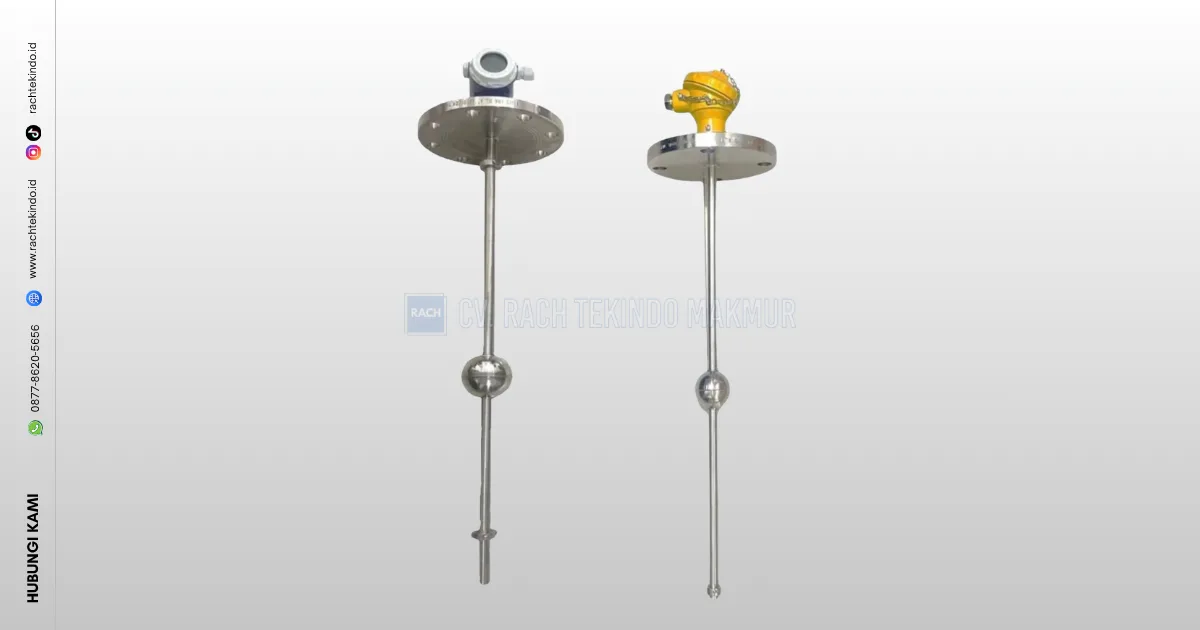
For clean water and general process liquids, several transmitter technologies can be used. When cost-effective continuous level measurement is required, Capacitance / Admittance Level Transmitters are often selected because of their simple construction, low maintenance, and easy integration with industrial control systems.
For corrosive chemicals, selecting the proper wetted materials is critical. PTFE, UPVC, CPVC, and Stainless Steel 316L provide excellent chemical resistance and improve long-term reliability.
Guided Wave Radar and Radar Level Transmitters are ideal for tall tanks, high-pressure vessels, and applications involving vapor or temperature changes. They provide stable and accurate measurement under demanding operating conditions.
Applications with foam, turbulence, or coating may require specialized technologies. RF Admittance transmitters help minimize measurement errors caused by material build-up, while radar technology performs well in applications with vapor and difficult process environments.
Hazardous areas such as fuel storage tanks should use transmitters with Explosion Proof or Intrinsic Safety certifications. Finally, always ensure that the output signal—such as 4–20 mA, HART, Modbus, or RS485—is compatible with your PLC, DCS, or SCADA system for seamless integration.