Choosing the right Electromagnetic Flow Meter requires more than selecting the correct pipe size or comparing product prices. To achieve accurate, stable, and long-term flow measurement, several important engineering factors must be evaluated before selecting the appropriate model.
The first consideration is the process liquid. Electromagnetic Flow Meters are specifically designed for conductive liquids such as clean water, wastewater, slurry, pulp, acids, alkalis, and many industrial chemical solutions. They are not suitable for non-conductive fluids including pure oil, diesel fuel, LPG, LNG, or gases because these media cannot generate the electromagnetic signal required for measurement.
The next factor is pipe diameter. Electromagnetic Flow Meters are available from DN10 up to DN2000, allowing them to be installed in almost any industrial piping system. Proper sizing ensures the recommended flow velocity is maintained for maximum measurement accuracy.
Selecting the correct liner material is equally important. Water applications often use Rubber or EPDM liners, while aggressive chemicals typically require PTFE, FEP, or PFA liners for superior chemical resistance and longer service life.
The electrode material should also match the process fluid. Common options include Stainless Steel 316L, Hastelloy C, Titanium, Tantalum, and Platinum depending on the corrosiveness of the application.
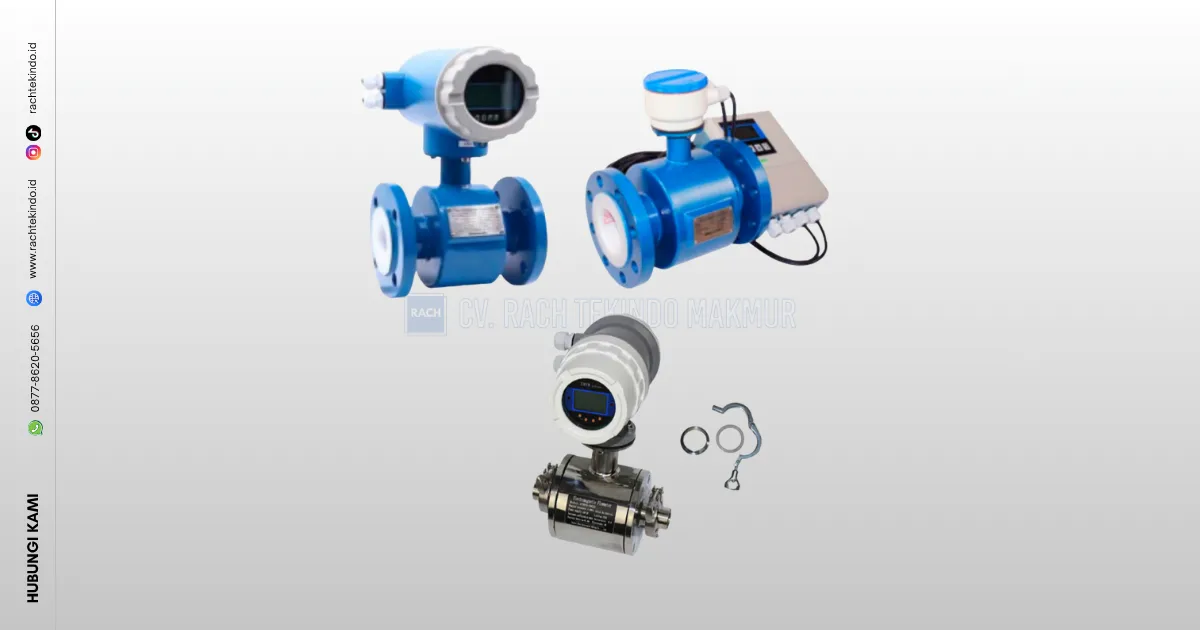
Installation requirements should also be considered. Compact Electromagnetic Flow Meters are suitable for standard installations, while Remote Converter models are recommended for locations with vibration, high temperatures, or difficult access.
Communication capability is another important consideration. Modern Electromagnetic Flow Meters support 4–20 mA, Pulse Output, RS485, and HART Protocol, making them compatible with PLC, DCS, SCADA, and Industrial Internet of Things (IIoT) platforms.
Finally, working with an experienced instrumentation supplier ensures the correct selection of pipe size, liner material, electrode material, installation method, and communication options. Proper engineering support helps maximize measurement accuracy while minimizing maintenance costs.
CV. Rach Tekindo Makmur supplies premium Electromagnetic Flow Meters for industrial applications throughout Indonesia. We provide technical consultation, engineering support, customized product selection, and complete flow measurement solutions tailored to your project requirements. Contact us via WhatsApp 0877-8620-5656 for expert assistance and competitive quotations.